Content:
LITERAL
(a) Statement saying: “I, Sarah Solar, affirm that I completed my independent component which represents 30 hours of work.”
(b) Best Source: Kim Nemeth: Mentor (909) 573-6378
(c) Log posted on right side of blog and here.
(d) I completed 30+ hours of team, and personal training.
INTERPRETIVE These trainings involved the use of tactical and technical skills (my 2nd and 3rd answers) and proved useful in my 4th interview for developing questions. I learned more about goalkeeping in the last two months than I ever have through training, coaching and watching all skill levels play the game. For a few photos, you may view the prior blog entry on "Beating the Mind". These detail the most major breakthrough I learned while training and playing.
How did the component help you answer your EQ? The first component basically provided me with my 2nd and 3rd answers. This 2nd component has allowed me to explore them further and take into account the order and magnitude of the skills involved. Tactical awareness was taught during games I've both played and watched. During play I came across many different sets of skills I've never used or learned how to apply them properly. By working on these techniques during practice I also finished off my 3rd answer.
Showing posts with label Independent Component. Show all posts
Showing posts with label Independent Component. Show all posts
Thursday, April 24, 2014

Monday, March 31, 2014
Additional Post: March Part 2: Beating the Mind
As a goalkeeper, there are situations you have to be able to handle that most would consider scary, even borderline crazy. Several times throughout the game keepers are challenged one-on-one and are required to dive at the attackers feet. Other times the keeper might be called on to make a big save that requires you be close to flying. For this instance, it's the flying that has always scared me.
The ball is flying to your right, nearing the point where the cross bar and the post meet. You need to make the jump to get your hands high enough to catch the ball, and the only way to do that is to take the leap of faith. You have to have total trust in your body and skills that you know how to land properly and hold on to the ball. It took a very long time for me to be able to know that everything would be okay. I'm not going to break anything in the process because I know how to land. I have been taught how to dive. I can do that in my sleep (well, maybe not. But you get the point). I know how to land and how to hold on to the ball, the next step was diving to high balls.
Essentially, you need to make a rainbow with your body. My coach (and mentor) used to have me jump over cones, ball bags, anything that was high enough for me to dive over. I have never been able to do it. I get scared, I jump over it instead of let my body fly. Finally though, I conquered it. It took a new technique, rope between 1 and 2 feet off the ground, and about 30 more minutes. Then I got it. I broke the mental barrier, and also led myself to what is most likely my best answer.
The following is a picture of me making the leap of faith (and fall of doom), catching balls I never would have previously been able to save. These pictures are without the rope since my photographer didn't show up in time for that demonstration (thanks, Dad). However, you can see my feet off the ground. This is towards the beginning of my dive, so I was still on my way up. With the rope you can really see how high I get.
 This next picture is of the fall of doom (as mentioned earlier). I've got to land with my arms outstretched, ball first. As you can see in the picture, the my hands are more on top of the ball. This is so I can hit the ground with the ball first. My legs then follow, one up to protect myself, and the other sliding along the ground. This is the end of the high dives I was never previously capable of stopping (I can thank my height for that one).

The ball is flying to your right, nearing the point where the cross bar and the post meet. You need to make the jump to get your hands high enough to catch the ball, and the only way to do that is to take the leap of faith. You have to have total trust in your body and skills that you know how to land properly and hold on to the ball. It took a very long time for me to be able to know that everything would be okay. I'm not going to break anything in the process because I know how to land. I have been taught how to dive. I can do that in my sleep (well, maybe not. But you get the point). I know how to land and how to hold on to the ball, the next step was diving to high balls.
Essentially, you need to make a rainbow with your body. My coach (and mentor) used to have me jump over cones, ball bags, anything that was high enough for me to dive over. I have never been able to do it. I get scared, I jump over it instead of let my body fly. Finally though, I conquered it. It took a new technique, rope between 1 and 2 feet off the ground, and about 30 more minutes. Then I got it. I broke the mental barrier, and also led myself to what is most likely my best answer.
The following is a picture of me making the leap of faith (and fall of doom), catching balls I never would have previously been able to save. These pictures are without the rope since my photographer didn't show up in time for that demonstration (thanks, Dad). However, you can see my feet off the ground. This is towards the beginning of my dive, so I was still on my way up. With the rope you can really see how high I get.
Thursday, March 6, 2014
Additional Post: March Part 1: The Many Faces of Goalkeeping
Here is a compilation of faces I make during the course of a single training for my Independent Component. Part Deux will be more related to my actual EQ answers. I just felt the need to share the, "Many Faces of Sarah Solar." I should publish a picture book.
 |
| The "I'm focusing and you can't stop me now" Face Also, The "normal concentration" Face |
 |
| The "calm before the storm" Face |
 |
| The "ball replaced my head" Face |
 |
| The "ugh, I just hit the ground...hard" Face |
 |
| Look Closely. This is the "I hit the ground and my face jiggled around like in a slow motion video" Face |
Wednesday, February 12, 2014
Blog 15: Independent Component Approval 2
1. I plan on using my own training with Legacy Soccer Club. Along with the training I will include any game time I play so I get the full experience of the game. During training I work both by myself and with my team. Training both independently with a coach and with a team gives a full perspective on the pre-game scenarios. Then my work during actual games will provide a tactical view of the game from both the perspective of a player and an onlooker. I will be training primarily with Kim Nemeth, my mentor, but also with Andre de la Rambelje as he is the head coach of the Girls Under 18 Legacy Team. (My team)
2. I will have someone take pictures of me while I'm training and during games. These images will be candid shots of me training and playing.
3. The way to learn the most about any sport is to actually play it. By immersing, then subsequently analyzing, myself in the plays, I am learning the most. In fact, I have come up with the most possible answers to my EQ through training and watching others play. Training gives the best technical perspective of the game. Through that you are learning skills and proper technique that propel your athletic prowess. Through playing games you are learning the tactical side of the game which includes any sort of game scenario. The only way to improve yourself and prevent mistakes is to actually make the mistakes. By allowing a goal and then analyzing what I did wrong, I am coming up with possible answers to my essential question.
4. The log has been posted on the right hand side of the blog.
2. I will have someone take pictures of me while I'm training and during games. These images will be candid shots of me training and playing.
3. The way to learn the most about any sport is to actually play it. By immersing, then subsequently analyzing, myself in the plays, I am learning the most. In fact, I have come up with the most possible answers to my EQ through training and watching others play. Training gives the best technical perspective of the game. Through that you are learning skills and proper technique that propel your athletic prowess. Through playing games you are learning the tactical side of the game which includes any sort of game scenario. The only way to improve yourself and prevent mistakes is to actually make the mistakes. By allowing a goal and then analyzing what I did wrong, I am coming up with possible answers to my essential question.
4. The log has been posted on the right hand side of the blog.
Thursday, February 6, 2014
Blog 14: Independent Component 1
Literal:
- "I, Sarah Solar, affirm that I have completed my independent component which represents 30 hours of work."
- My mentor, Kim Nemeth, and my coach, Andre De La Rambelje helped me the most, since they're my coaches. They were the ones that coached me through my training from the start of the year for this particular component.
- [here is the link to my hours]
- I completed over 30 hours of personal and team training as a goalkeeper. I worked on both tactical and technical skills that improved my knowledge of the game and the position.
- I spent several hours each week during the season to complete these hours. During the games I played, I definitely learned the definitions of tactical vs. technical training. I trained or was playing during every single minute of the hours I have submitted. During games I was both playing and analyzing what could have been done better. During my training I was learning the ways that focus and the psychological aspect of goalkeeping needs to be overcome.
- Here are the images showing some of what I did during independent component. Please excuse the poor quality of a few of the images, the person taking the images was using a device they had never used before.
- I furthered my knowledge of the foundation of my topic my immersing myself in the actual activity through games and training. The best way to gather knowledge of a sport is to actually play the game, and that is exactly what I was doing.
- Example 1: During my training I entered the psychological side of goalkeeping during high diving. I was required to dive over a rope (approximately 2 feet off the ground). This is a drill I've always had trouble with, and my mentor, Kim Nemeth, has constantly reassured me that if I forget about everything and stop thinking, that I will finally make the jump to proficiency.
- Example 2: During my mentorship one day, I was introduced to the difference and associations of tactical vs. technical training. During a game shortly after I learned that, I actually experienced it and thought about it. During the game you use tactical (in game) moves. You don't focus on the technical (or proper technique) during saves. In fact, you don't think about it much at all. But both are extraordinarily important.
Friday, January 31, 2014
Additional Post 6: Pain is Only Weakness Leaving the Body
One word. Pushups. Three different methods means three new breeds of pain I am purposefully inflicting upon myself. Some may call it crazy; I call it training.
In the past two weeks, my mentor has started a new training regiment with me involving pushups. I am required to do as may as I can. I'm supposed to go until my arms get so tired I can't possibly do any more. This training regiment is among other things, meant to strengthen my arms and core. Developing your pushup ability is crucial to power and stability as well. By optimizing those skills I am allowing myself to get to the ball quicker and stay steady on my feet, all things that are optimal for preventing a goal from being scored.
These sets are repeated every time I have practice, and sometimes on my own time. After several weeks I will hopefully have increased the number of reps and subsequently my strength. This torture is only in place to make me better.
The following images show the 3 different varieties of pushups I do for this drill.

I start out with my hands in a diamond position as shown. Then I do as many as I possibly can. I am currently just over 20. Once my arms fall out from beneath me I am allowed a 1 minute rest.

The next style of pushup is a tricep pushup. I am definitely not accustomed to these yet and can only produce 5-7 at a time. These are the most difficult for me. Normally my arms bend out and away from my body. With these, your arms are required to stay by your side. Some people call them the military pushup.

After my last minute of rest, I continue on with the 3rd and final pushup style. These are just normal pushups you're taught in gym. If done by themselves without the other two kinds of torture I can churn out 40 or more at a time. But by the time I'vepassed out hit the ground twice, these become more difficult and I can usually only produce 10 or so.
And repeat...Everything...Yes, everything.
And now that you're exhausted from purely reading this, I sign off.
Until next time.
In the past two weeks, my mentor has started a new training regiment with me involving pushups. I am required to do as may as I can. I'm supposed to go until my arms get so tired I can't possibly do any more. This training regiment is among other things, meant to strengthen my arms and core. Developing your pushup ability is crucial to power and stability as well. By optimizing those skills I am allowing myself to get to the ball quicker and stay steady on my feet, all things that are optimal for preventing a goal from being scored.
These sets are repeated every time I have practice, and sometimes on my own time. After several weeks I will hopefully have increased the number of reps and subsequently my strength. This torture is only in place to make me better.
The following images show the 3 different varieties of pushups I do for this drill.

I start out with my hands in a diamond position as shown. Then I do as many as I possibly can. I am currently just over 20. Once my arms fall out from beneath me I am allowed a 1 minute rest.

The next style of pushup is a tricep pushup. I am definitely not accustomed to these yet and can only produce 5-7 at a time. These are the most difficult for me. Normally my arms bend out and away from my body. With these, your arms are required to stay by your side. Some people call them the military pushup.
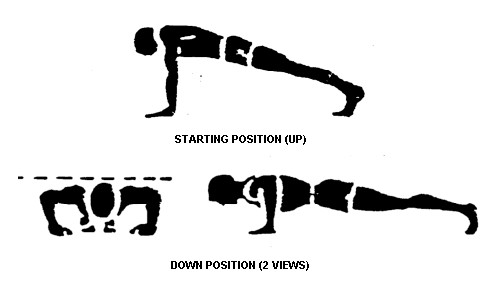
After my last minute of rest, I continue on with the 3rd and final pushup style. These are just normal pushups you're taught in gym. If done by themselves without the other two kinds of torture I can churn out 40 or more at a time. But by the time I've
And repeat...Everything...Yes, everything.
And now that you're exhausted from purely reading this, I sign off.
Until next time.
Monday, December 30, 2013
Additional Post 5: Downtime and Realizations
The "Fall" season for club ended earlier this month. Everyone started high school and CIF (California Interscholastic Federation) doesn't allow players to do both high school sports and be on another team at the same time. This means that club divisions aged 14 and older can't practice or hold tournaments until January or February (depending on local team standings). I have been practicing with my goalkeeping coach Kim since my coach can't hold a full team practice.
As a senior, this upcoming season is bittersweet. It will be the end of an era for me. From here I can coach, which is definitely something I will seek out. But of course that isn't the same. I've been playing with a lot of the same girls since I was in 7th grade, some of them even longer. It hasn't really hit me until now, but when that final game comes I will be leaving the team forever. It will be my own special senior farewell since I didn't play high school sports. I will likely be the only one leaving the team. We are allowed to play after we graduate high school, but I plan on moving up north for college. This realization is hard, but a necessary step to further my progress to success.
As a senior, this upcoming season is bittersweet. It will be the end of an era for me. From here I can coach, which is definitely something I will seek out. But of course that isn't the same. I've been playing with a lot of the same girls since I was in 7th grade, some of them even longer. It hasn't really hit me until now, but when that final game comes I will be leaving the team forever. It will be my own special senior farewell since I didn't play high school sports. I will likely be the only one leaving the team. We are allowed to play after we graduate high school, but I plan on moving up north for college. This realization is hard, but a necessary step to further my progress to success.
Saturday, November 30, 2013
Additional Post 4: Getting Past a Slow Learning Curve
During training your only goal is to improve yourselves and the others around you. For a goalkeeper, that usually means getting extra training because team training isn't enough. That is the case with my Under 14 AYSO keeper. She started training with my team's goalkeepers to help her improve faster.
Now. For a goalkeeper there are a lot of things to focus on and work towards. For example. When you're diving you have to:
Now. For a goalkeeper there are a lot of things to focus on and work towards. For example. When you're diving you have to:
- Be aware of all non-moving surroundings (especially the goalposts)
- Know where both the defense and the offense are
- Keep your eye on the ball
- Protect yourself
- Land properly to prevent injury
- Catch the ball properly to prevent a loose ball
- And in game scenarios, dive forward so when you catch the ball you don't bring it into the net with you.
You can't master a dive until all of the components are understood and working. This means working towards each one individually if you are having a problem. During MY training the other day I was working on tipping the ball over the net from a ball that is directly overhead. This is more difficult than it sounds for someone that is 5'0'' and still can't reach the crossbar.
Picture this. A keeper is in the net about 6 yards off of their line in the center of the goal. A ball is chipped directly over the head of the keeper, but if she get back quickly enough she can do a backwards dive and tip it out.
I started out doing a drill doing exactly what I mentioned. I missed every single one and wasn't getting the dives down properly. Kim, my goalie coach told be to go on my knees and do it that way. By starting from my knees she isolated the diving component of this drill. All I had to do was follow the ball, tip it, then fall backwards. I now have aced that, and the next practice I will be working from my feet again.
Wednesday, October 2, 2013
Independent Component 1 Approval
Content:
1. I plan on playing games and attending practices with my club team, Legacy.
2. To obtain the required number of hours for this component I plan on attending every practice, twice a week, and every game. We practice for upwards of 3 hours per week and including the training before the game starts, hours for games can range from 2 to 4 hours per game.
3. Coaching goalkeepers is one thing, but training as a keepers is something else. I am constantly learning new things during practices and overcoming new situations during games. Researching the game as a player is just as valuable as the reading material I've gone through.
1. I plan on playing games and attending practices with my club team, Legacy.
2. To obtain the required number of hours for this component I plan on attending every practice, twice a week, and every game. We practice for upwards of 3 hours per week and including the training before the game starts, hours for games can range from 2 to 4 hours per game.
3. Coaching goalkeepers is one thing, but training as a keepers is something else. I am constantly learning new things during practices and overcoming new situations during games. Researching the game as a player is just as valuable as the reading material I've gone through.
Subscribe to:
Posts (Atom)